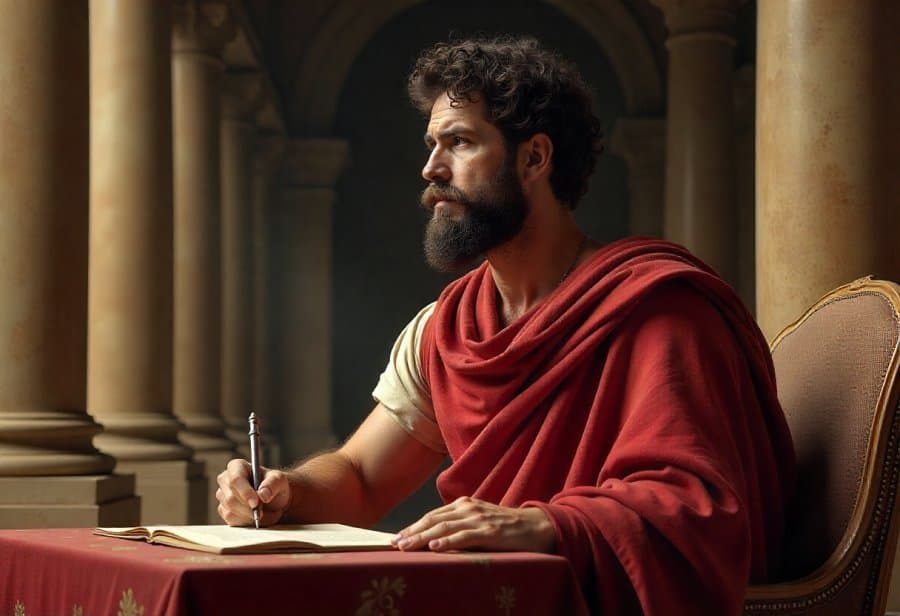
Breaking free: Nietzsche’s fiery critique of religion and societal chains offers an exhilarating exploration of one of philosophy’s most rebellious minds. Born into a conservative, religious environment, Nietzsche’s early life was marked by loss and a relentless questioning of inherited values. His philosophy advocates for individual strength, self-creation, and the embrace of chaos as vital sources of growth and authenticity. Challenging traditional morality and societal norms, Nietzsche urges us to forge our own paths through deliberate choices and passions, transforming upheaval into empowerment. His ideas continue to resonate deeply in modern culture, inspiring movements that emphasize personal agency, authenticity, and resistance to conformity. From psychology and literature to social and political thought, Nietzsche’s daring vision persists as a catalyst for cultural transformation, urging us to see chaos not as a threat but as fertile ground for self-overcoming and genuine freedom.
Unveiling Nietzsche’s Impact: Redefining Modern Thought and Culture
Friedrich Nietzsche’s influence on modern thought and culture is both profound and enduring. His daring rejection of traditional values and his emphasis on individual strength and self-creation have reshaped how we understand morality, art, and personal freedom. Nietzsche pushes us to question ingrained beliefs and encourages a deeper exploration of what it truly means to live authentically. His ideas challenge the status quo and continue to spark debate, inspiring both admiration and controversy.
Born in 1844 in Röcken, Germany, Nietzsche grew up in a deeply religious environment. His father, a Lutheran pastor, died when he was just five, leaving him primarily in the care of his mother and sister—both devout Christians. This early upbringing immersed him in conservative Christian values, which he later fiercely challenged. His education in classical philology sharpened his critical mind and laid the foundation for his rebellion against societal norms and religious dogma.
Living through a period of intense cultural upheaval—marked by the rise of modern science, secularism, and declining religious authority—Nietzsche witnessed a world in flux. These shifts fueled his desire to rethink human values and morality. His philosophy emerged as a response to this turbulence, emphasizing individualism, the will to power, and the importance of creating personal meaning in a world often perceived as chaotic and without inherent order. His groundbreaking ideas continue to resonate, urging us to examine the societal and moral frameworks that shape our lives today.
Foundations of Rebellion: Nietzsche’s Life, Upbringing, and the Cultural Storm
Friedrich Nietzsche was born in 1844 in Röcken, Germany, into a devoutly religious family. His father, a Lutheran pastor, died when Nietzsche was just five years old, leaving him primarily under the care of his mother and sister—both of whom held strong religious convictions. This early environment immersed him in conservative Christian values, which he would later fiercely challenge. His rigorous education in classical philology at a young age sharpened his critical mind and laid the groundwork for his philosophical rebellion against religious dogma and societal norms.
Growing up amid the cultural upheavals of 19th-century Europe, Nietzsche witnessed the rise of modern science, secular thought, and the decline of religious authority. These shifts questioned long-held beliefs and created fertile ground for his ideas about individualism and the will to power. His personal experiences of loss, faith, and intellectual curiosity fueled his desire to rethink morality and human purpose. Nietzsche’s formative years were marked by a rebellion against the constraints of his upbringing, shaping his lifelong pursuit to redefine values in a world undergoing rapid industrialization and secularization.
Living through this turbulent era, Nietzsche was deeply influenced by the upheaval of traditional beliefs and the emergence of new philosophies centered on human achievement and self-creation. His critique of morality, especially Christian morality, was rooted in his observation that these systems often suppressed vitality and authentic self-expression. Instead, he emphasized personal strength, creative freedom, and the importance of forging one’s own values. His background, combined with the broader historical context, provided the foundation for his revolutionary ideas—challenging long-standing assumptions and inspiring a cultural shift toward embracing chaos as a source of self-empowerment.
Shaping Minds and Societies: Nietzsche’s Enduring Influence on Philosophy, Psychology, and Art
Friedrich Nietzsche’s ideas have left a profound and lasting imprint on modern thought, influencing a wide array of disciplines beyond philosophy itself. His emphasis on individualism rebellion inspired a wave of intellectual movements that challenge authority and question societal norms. In psychology, thinkers like Sigmund Freud drew on Nietzsche’s insights into the subconscious and human drives, enriching our understanding of internal motivations and conflicts. Literature also echoes his influence, with authors such as Kafka and Joyce exploring themes of chaos, self-creation, and existential angst—mirroring Nietzsche’s call to embrace life’s uncertainties as pathways to authenticity.
Nietzsche’s critique of morality, especially his rejection of Christian values, continues to shape cultural critique today. Philosophers like Michel Foucault and Gilles Deleuze have incorporated his concepts of power and self-overcoming into their theories, sparking debates about authority, identity, and social structures. Movements such as existentialism and postmodernism build on his suspicion of fixed values, emphasizing subjective experience and the fluidity of meaning. His philosophy of freedom and self-creation encourages individuals to carve their own paths, fostering cultures that prize rebellion against conformity and celebrate creative chaos.
In contemporary society, Nietzsche’s ideas resonate in social debates around individuality, authenticity, and authority. Movements advocating for social change, gender equality, and anti-authoritarianism draw from his emphasis on personal agency and the power of self-overcoming. His challenge to hierarchical norms invites us to question inherited beliefs and scrutinize societal constraints that hinder growth. As technological and moral landscapes shift rapidly, Nietzsche’s call for deliberate self-creation remains a vital tool for navigating change, inspiring ongoing reflection about what it means to live freely and authentically.
Today, Nietzsche’s influence persists because his ideas encourage us to see chaos not as a threat but as a fertile ground for growth. By embracing uncertainty and asserting personal agency, we continue to challenge the status quo and forge more authentic, liberated lives. His philosophy remains a catalyst for cultural transformation, urging each of us to become active architects of our own destiny in an ever-evolving world.
The Power Within: Nietzsche’s Philosophy of Freedom, Self-Creation, and Embracing Chaos
Friedrich Nietzsche’s philosophy of freedom and self-creation centers on the idea that true agency arises from within, not from external forces. He believed that individuals possess the power to shape their lives through deliberate choices, passions, and actions, even amid chaos. Embracing life’s uncertainties becomes a source of strength and authenticity rather than weakness. Nietzsche saw chaos as a fertile ground for creativity, where internal conflicts and unpredictable events serve as catalysts for personal growth and self-discovery.
For him, self-creation is a rebellious act against societal norms and herd mentality. Instead of conforming to prescribed roles or moral standards, individuals are encouraged to craft their own values, guided by instinct and passion. This ongoing process demands courage—a willingness to challenge tradition, experiment with new ideas, and accept disorder as an inherent part of existence. Through continuous acts of self-overcoming, we become architects of our destiny, evolving beyond internal doubts and external obstacles.
Nietzsche emphasized that life’s chaos is not an obstacle but a raw material for renewal. Authentic self-formation involves embracing doubts, passions, and struggles as sources of strength. This perspective aligns with his broader call for individualism rebellion—living freely and fully by asserting personal power in a world that often seeks to suppress it. His philosophy advocates for active self-determination, urging us to see ourselves as creators rather than passive recipients of fate.
By asserting agency amid chaos, we break free from societal constraints and shape lives rooted in our deepest values and desires. Every upheaval becomes an opportunity for growth and resilience, reinforcing his belief that genuine freedom emerges through relentless self-creation. Embracing the unpredictable elements of life transforms chaos from a threat into a vital source of transformation and empowerment.
Living in Flux: The Contemporary Relevance of Nietzsche’s Rebel Spirit and Ideas
Friedrich Nietzsche’s ideas continue to ripple through contemporary culture, shaping how we view identity, morality, and power. His critique of traditional values and emphasis on individualism rebellion remain a powerful force for those seeking authenticity and personal freedom. Philosophers like Michel Foucault and Gilles Deleuze have integrated Nietzsche’s concepts of self-overcoming and the will to power into their work, challenging entrenched social hierarchies and encouraging a more fluid understanding of selfhood. This ongoing dialogue keeps Nietzsche’s philosophy vital, prompting us to question authority, societal norms, and the very structures that define us.
In the arts and literature, Nietzsche’s influence is evident in the works of Kafka, Joyce, and others who explore chaos, self-creation, and existential uncertainty. These creators echo his call to embrace life’s unpredictability as a pathway to genuine self-discovery. Movements such as existentialism and postmodernism build on his suspicion of fixed values, emphasizing subjective experience and the fluidity of meaning. His philosophy of freedom and self-creation inspires individuals to carve their own paths, fostering cultures that prize rebellion against conformity and celebrate the creative chaos of life.
Today, Nietzsche’s ideas resonate deeply in social debates around individuality, authenticity, and authority. Movements advocating for social change, gender equality, and anti-authoritarianism draw strength from his emphasis on personal agency and the power of self-overcoming. His challenge to hierarchical norms encourages critical reflection on inherited beliefs and societal constraints that hinder growth. As rapid technological and moral shifts redefine our world, Nietzsche’s call for deliberate self-creation remains a vital tool for navigating change, urging us to forge lives rooted in authenticity and resilience.
His influence endures because it champions chaos not as a threat but as a fertile ground for growth. Embracing uncertainty and asserting personal agency allows us to challenge the status quo and pursue more authentic, liberated lives. Nietzsche’s ideas serve as a catalyst for cultural transformation, inspiring each of us to become active architects of our own destiny in an ever-evolving landscape.