Why does America remain captivated by charismatic figures who sell simple solutions—are we drawn to genuine cures or just enchanted by snake oil? From Clark Stanley’s theatrical medicine shows of the 19th century to Donald Trump’s modern political rallies, spectacle has long been a powerful tool to influence public perception. These performances tap into deep-seated psychological and cultural desires for reassurance, belonging, and quick fixes amid complexity and chaos. They turn intricate issues into emotional stories, often overshadowing substance with entertainment. But what does this tell us about American ideals and vulnerabilities? Is our fascination with spectacle a reflection of hope or a susceptibility to deception? Examining history and psychology reveals that the enduring appeal of showmanship challenges us to develop critical thinking, fostering resilience against superficial promises. Ultimately, understanding this dynamic asks us: can we demand transparency and authenticity in a culture enamored with illusion?

Why America Craves Charismatic Figures Promising Simple Solutions
Why does America seem so captivated by charismatic figures who promise simple solutions? From political leaders to health gurus, there’s a long-standing fascination with individuals who persuade through spectacle, confidence, and emotional appeal. This isn’t accidental; it reflects deeper cultural and psychological traits that shape how we process complex issues. When faced with a confusing and overwhelming world, many people crave clarity and reassurance. Charismatic figures offering straightforward answers become symbols of hope, turning complicated problems into digestible stories that feel within reach.
This attraction to simplicity stems from our fundamental need for certainty. During times of chaos or uncertainty, quick fixes and bold personalities appear to promise stability. These figures craft narratives that evoke hope and belonging, transforming intricate issues into emotionally resonant tales. Their confidence fosters trust, even if their solutions lack nuance or oversimplify reality. It’s as if these leaders tap into a collective desire for control, offering shortcuts through the complexities of modern life.
Historically, spectacle has played a central role in shaping American perception. From 19th-century medicine shows to today’s energetic political rallies, entertainment has been a powerful persuasion tool. These events create immersive experiences that appeal to our love of drama and our desire for reassurance. Showmanship turns messages into emotional moments—whether selling miracle cures or rallying support—making them memorable and emotionally resonant. Spectacle becomes a way to bypass rational skepticism and connect directly with feelings.
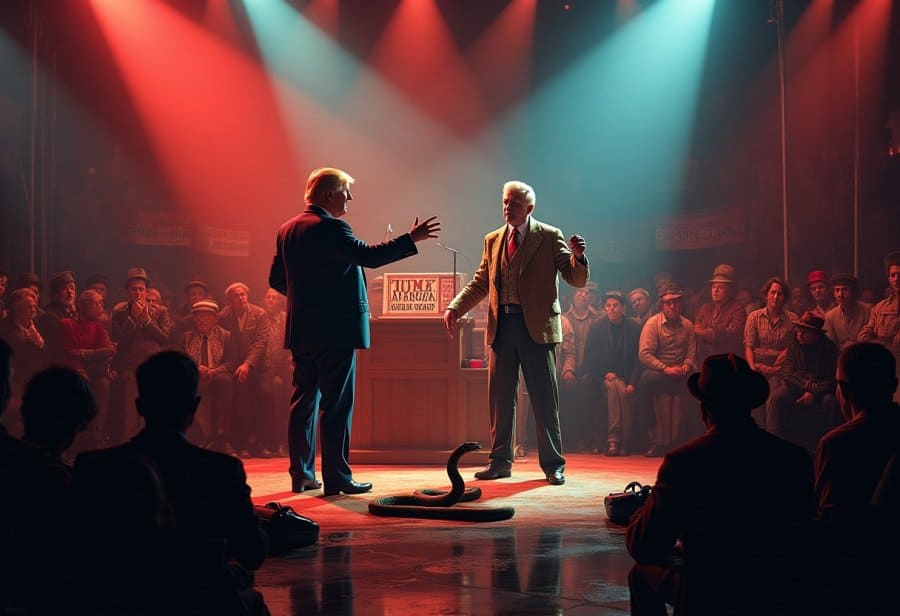
Both medicine shows and political campaigns understand spectacle’s power. Clark Stanley’s rattlesnake demonstration in 1893 was more than a sales pitch; it was performance art that played on fears and hopes. Similarly, modern politicians use visuals, stagecraft, and theatrics to forge emotional bonds. In both cases, spectacle transforms complex issues into visceral moments that foster trust and loyalty—more through feeling than facts.
This pattern of attraction reveals something fundamental about American culture. We admire leaders who seem authentic and relatable, even if they carefully craft that authenticity. The promise of quick, easy solutions appeals to our optimism and belief that problems can be solved simply—if only we find the right person. Whether in medicine or politics, these figures become symbols of hope, riding waves of emotional appeal that resonate deeply with our collective psyche.
At its core, the fascination with snake oil and spectacle shows that many Americans are searching for hope and certainty. In a world of ambiguity, miracle cures and charismatic leaders offer comfort—an emotional balm during turbulent times. But beneath that desire lies vulnerability: the temptation to accept easy answers that may be illusions. Recognizing this tendency is the first step toward understanding why we’re so drawn to figures promising quick fixes, even when reality is far more complex.
The Origins of Spectacle: Medicine Shows and Political Rallies as Entertainment Persuasion
From the earliest days of American history, spectacle has been central to shaping public perception and influencing behavior. Medicine shows in the 19th century exemplify this tradition perfectly. These traveling performances blended entertainment with sales pitches, drawing large crowds eager for cures and promises of health. Performers like Clark Stanley, known as the “Rattlesnake King,” used dramatic acts—pulling rattlesnakes from sacks, slicing them open, and boiling their fat—to captivate audiences. Their acts weren’t just about selling remedies; they created memorable spectacles that stirred emotions, playing on fears and hopes alike.
These shows aimed to persuade through theatrical flair. The visual drama of snake oil demonstrations, with loud gestures and storytelling, made their messages stick. They transformed health remedies into entertainment, even if much of it was deception. Spectacle helped bypass rational skepticism by appealing directly to feelings, making the abstract idea of medicine feel urgent and tangible. The show’s allure lay in its ability to turn ordinary transactions into immersive, emotional experiences.
Similarly, political rallies of the era adopted the same principles of showmanship. Leaders understood that entertainment could forge emotional bonds and sway opinions. Large banners, dramatic staging, and fiery speeches turned politics into immersive spectacles. These gatherings weren’t solely about policy—they fostered loyalty by creating shared emotional moments. Spectacle became a powerful tool to influence perceptions, often more through emotion and visual storytelling than through facts or reason.
Both medicine shows and political campaigns reveal that spectacle has long been woven into America’s cultural fabric. They turn simple messages into emotionally charged stories that evoke hope, fear, or loyalty. Whether it’s a snake being sliced open or a crowd chanting slogans, the core technique remains consistent: use entertainment to influence perception and deepen emotional engagement. These events create shared experiences that foster trust and belonging, often overshadowing rational analysis.
The roots of spectacle in America expose a deep love for drama and storytelling. Leaders and performers have learned that emotional resonance often outweighs factual accuracy, making spectacle an enduring persuasion tactic. Recognizing this history helps us understand why spectacle remains a potent force today—because it taps into universal human needs for connection, hope, and certainty, especially in uncertain times.
Why Americans Are Drawn to Simplicity and Charisma: Emotional and Identity Drivers
Americans are naturally drawn to simple solutions and charismatic leaders because these figures tap directly into deep emotional and identity needs. Our culture, rooted in values like individualism, resilience, and relentless optimism, fosters a longing for reassurance that complex problems can be solved with straightforward answers. Charismatic figures craft narratives that evoke hope, belonging, and protection, making followers feel understood and validated. These stories resonate because they speak to universal desires for safety and clarity, especially amid uncertainty or chaos.
Showmen and leaders who exude confidence and authenticity hold a special place in American culture. They seem to embody the rugged resilience and self-reliance that define the national character. Whether it’s a self-made entrepreneur or a populist politician, these figures appear to understand the everyday struggles of ordinary people and promise quick, uncomplicated fixes. Their ability to connect emotionally—through storytelling, gestures, or stage presence—fuels admiration and loyalty. Followers want to believe that someone truly “gets” them, and charisma makes that feel possible.
The appeal of simple solutions also has a cognitive basis. When faced with social or political complexity, our brains seek shortcuts—ways to reduce mental effort and uncertainty. Leaders who deliver catchy slogans or clear answers make it easier to process information, especially during crises. These messages offer reassurance and a sense of control, even if they gloss over nuance or deeper issues. Simplification becomes an escape hatch from the chaos and ambiguity of modern life.
Emotion plays a crucial role in these dynamics. Leaders who evoke feelings like hope, fear, pride, or anger forge strong emotional bonds. By tapping into core feelings, they create shared purpose and loyalty that are hard to break. This emotional connection often outweighs rational scrutiny, making followers more receptive to stories that reinforce their worldview. Charisma, in this sense, becomes a tool for emotional influence rather than factual persuasion.
Culturally, Americans have long celebrated larger-than-life personalities. From stage performers to political icons, there’s a tendency to equate authenticity with confidence and storytelling ability. This cultural admiration makes it easier for charismatic figures to appear genuine, reinforcing the idea that true authenticity is a matter of presentation. Believing in the sincerity of these figures feeds the perception that they truly understand and represent the hopes and fears of the people.
The belief in miracle cures and quick fixes is deeply ingrained in American stories. From frontier legends to modern media, narratives about instant transformation and effortless solutions have captivated the public imagination. These stories offer hope and comfort during uncertain times, making it tempting to accept simple answers—even if they are illusions. This pattern helps explain why the allure of charismatic leaders promising easy cures remains so powerful, despite the complexities of real-world problems.
Recognizing this attraction reveals a fundamental truth: many Americans seek comfort in certainty and the reassurance of a quick fix. While this tendency can make us vulnerable to deception, it also reflects a desire for hope and belonging. Leaders who understand this emotional landscape can craft messages that resonate deeply, for better or worse. The challenge lies in balancing the human craving for simplicity with the need for genuine understanding and nuanced solutions.
This tendency to favor quick fixes and charismatic leadership often opens the door for figures who may not have our best interests at heart. For instance, the rise of the so-called ‘Snake Oil Salesman of the Senate’ exemplifies how persuasive personalities can promote dubious solutions under the guise of confidence and authority. Recognizing these patterns can help us stay more critical and discerning of the messages we encounter.
History in Action: Snake Oil Showcases and Modern Political Spectacles
Throughout American history, spectacle and persuasion have played a central role in shaping public opinion and political success. One vivid example is Clark Stanley, the “Rattlesnake King,” who in 1893 captivated audiences at the World’s Columbian Exposition with a theatrical demonstration. He pulled a live rattlesnake from a sack, sliced it open in front of a crowd, and boiled its fat, claiming it held miraculous healing powers. His performance wasn’t just about selling medicine; it was pure showmanship—drama and emotion wrapped into a single act that stirred fears and hopes alike.
Fast forward to modern politics, and Donald Trump’s 2016 campaign rallies highlight how spectacle continues to be a powerful persuasion tool. His events resemble concerts more than traditional speeches—full of energetic chants, bold visuals, and larger-than-life personas. These rallies create immersive experiences, making supporters feel part of a movement. The stagecraft and theatrics forge emotional bonds that often overshadow policy details, turning politics into entertainment that taps into deep feelings of loyalty and belonging.
Both examples reveal a common thread: spectacle is a timeless method to influence perceptions. In Stanley’s era, dramatic snake oil demonstrations played on fears and hopes, transforming medicine into entertainment. Today’s political rallies do the same, blending visual flair with emotional storytelling. Whether it’s a snake being sliced open or a crowd chanting slogans, the core remains—emotional resonance and entertainment make messages memorable and persuasive, quickly turning complex issues into visceral moments.
The history of snake oil itself adds an intriguing layer. The original snake oil was a legitimate remedy brought to America by Chinese railroad workers, made from water snakes rich in omega-3 acids that eased inflammation. Clark Stanley’s version, however, erased its Chinese roots, turning it into a symbol of deception. His fake cures relied on spectacle—dramatic acts designed to sell illusions rather than truth—highlighting how entertainment can distort reality and promote false hopes.
In modern politics, figures like Trump understand that crafting an identity rooted in spectacle can foster a sense of authenticity and protection. Promises like “building the wall” or “draining the swamp” function much like snake oil—easy solutions in a bottle, promising relief from complex problems. Both the snake oil salesman and the populist leader know that emotional, theatrical displays can cultivate loyalty and trust more effectively than facts or nuanced debate.
These case studies demonstrate that spectacle remains a core tool for persuasion, rooted in America’s cultural DNA. From 19th-century medicine shows to today’s political rallies, the pattern is clear: captivating visuals and emotional storytelling often trump rational argument. By turning abstract issues into visceral experiences, spectacle creates bonds of loyalty that endure beyond the facts, shaping perceptions in powerful, lasting ways.
The Impact of Spectacle on Democracy and Society: Trust, Polarization, and Engagement
Spectacle wields a powerful influence over democracy, shaping how leaders connect with the public and how society trusts its institutions. When politicians lean into showmanship—massive rallies, dramatic visuals, and memorable slogans—they energize supporters and foster a sense of unity. But this focus on entertainment can oversimplify complex issues, turning policy debates into emotional performances that leave little room for nuance or critical thinking. As politics becomes more about spectacle than substance, citizens may view the process as entertainment rather than a serious pursuit, gradually eroding trust in democratic institutions.
The danger lies in how spectacle can distort democratic priorities. Leaders who prioritize flashy campaigns and media stunts often sideline meaningful policy work. This shift toward image over substance feeds misinformation and deepens societal divides. When leaders craft messages designed more to evoke emotional reactions than to inform, they reinforce echo chambers and polarize communities. Citizens increasingly accept superficial narratives that align with their biases, neglecting the complexity of real issues. Over time, this dynamic weakens the foundation of an informed democracy, where accountability depends on rational debate and scrutiny.
Charismatic figures skilled in showmanship may manipulate emotional bonds for personal or political gain, blurring the line between genuine leadership and entertainment. When the focus shifts to creating a captivating persona, critical engagement diminishes. Supporters become passive consumers of emotionally charged messages, less inclined to question or challenge. This dynamic rewards leaders for their ability to entertain rather than govern effectively, risking a decline in transparency and accountability. As politics is reduced to spectacle, it risks becoming a game of appearances rather than a process of meaningful decision-making.
Fostering resilience in society requires strengthening media literacy and critical thinking. Citizens need tools to evaluate claims beyond surface appearances, to question motives, and to seek evidence. Encouraging open dialogue that challenges dominant narratives helps prevent manipulation and broadens understanding. Education systems emphasizing evidence-based reasoning and skepticism of emotional appeals can equip people to see through superficiality and hold leaders accountable. When individuals learn to recognize spectacle’s signs, they become less vulnerable to deception and better equipped to demand honesty.
Supporting institutions committed to transparency and integrity further safeguards democracy. Independent media outlets, civic organizations, and educational initiatives play vital roles in promoting honesty and accountability. When these pillars are strong, society becomes less receptive to spectacle designed solely to entertain or deceive. Instead, it fosters an environment where truth and substance are valued over showmanship, helping rebuild trust in democratic processes. This focus on integrity encourages a more engaged, informed citizenry capable of resisting manipulation.
Understanding spectacle’s impact reveals why quick fixes and superficial solutions often gain traction. They offer emotional comfort during turbulent times but rarely address underlying problems. Building resilience involves cultivating a collective mindset that values patience, perseverance, and genuine engagement over fleeting entertainment. Leaders and citizens alike must prioritize long-term understanding and solutions rooted in facts rather than fleeting illusions. In doing so, society can protect democracy from seductive showmanship and ensure it serves the public good.

Moving Forward: Cultivating Critical Thinking and Resisting the Allure of Illusions
Understanding why snake oil and spectacle continue to captivate us goes beyond merely recognizing their surface appeal. It calls for a conscious effort to develop critical thinking and media literacy, empowering us to evaluate the stories and claims we encounter daily. Teaching people to question narratives, examine motivations, and demand evidence helps build resilience against manipulation rooted in emotion and entertainment. When we learn to spot the telltale signs of deception—whether in political speeches, advertisements, or social media—we become less susceptible to false promises and more capable of demanding accountability.
Cultivating a culture that values transparency and open debate is equally vital. Encouraging diverse viewpoints and respectful discussion creates spaces where assumptions are challenged and nuance is embraced. This approach helps expose oversimplified solutions and broadens understanding, making it harder for charismatic figures to dominate with superficial charm. When curiosity and a willingness to explore deeper issues are fostered, reliance on quick fixes diminishes, and meaningful dialogue becomes possible.
Education plays a central role in this shift. Emphasizing evidence-based reasoning and analytical skills equips individuals to differentiate fact from fiction. Media literacy programs that teach how to identify bias, misinformation, and manipulative tactics are essential for nurturing a skeptical and discerning public. Recognizing how spectacle is crafted and understanding its appeal allows us to see through the illusions, reducing our vulnerability to deception and strengthening our capacity to hold leaders accountable.
Building societal resilience also depends on supporting institutions that prioritize transparency and integrity. Independent media outlets, civic organizations, and educational initiatives serve as vital pillars in promoting honesty and accountability. When these institutions are robust, society becomes less receptive to spectacle designed solely to entertain or manipulate. Instead, it fosters an environment where truth and substance take precedence over entertainment, reinforcing trust in democratic processes.
Finally, understanding the deep psychological and cultural roots of our attraction to spectacle helps us guard against its seductive power. The desire for certainty, reassurance, and quick fixes is ingrained in our collective psyche. Recognizing that emotional resonance often outweighs factual accuracy in shaping beliefs enables us to resist superficial appeals. Cultivating patience, perseverance, and a focus on genuine understanding can shift our collective mindset away from illusions and toward reality.
Ultimately, safeguarding ourselves and our democracy from the allure of snake oil and spectacle requires active effort. It demands that we prioritize honesty, foster curiosity, and value long-term solutions over fleeting entertainment. By strengthening critical faculties and supporting transparent institutions, we can build a society that demands integrity and resists deception. This collective commitment ensures that truth remains at the heart of our public life, guiding us toward more authentic, sustainable progress.